
When looking to improve the customer experience and reach new markets, offering a variety of payment options is an effective strategy. In fact, about 32% of merchants1 added new ways to pay this year specifically to reduce cart abandonment.
By giving customers the flexibility to pay how they prefer—whether via cards, digital wallets or bank transfers—businesses can streamline the buying experience while potentially lowering processing costs. Nearly 60% of merchants2 now accept bank transfers, which can be effective for sending larger amounts of money or doing business with other companies.
Managing recurring payments presents its own challenges, as failed payments due to a closed account or insufficient funds can result in unintended cancellations and lost revenue.
Businesses are also rapidly adopting generative AI, with more than half of merchants3 already using smart AI tools to detect fraud and accelerate decision making, which frees up staff to focus on business priorities. Whatever payment methods you offer, they need to be fast, reliable and secure. Authorize.net solutions for small and medium-sized businesses deliver all of these—providing more opportunities to focus on what really matters to your business.
What are payment methods?
Payment methods are the different ways customers can transfer money to pay for goods and services, ranging from traditional options like cash and checks to modern digital solutions.
Recurring and subscription billing
When customers sign up for a streaming service such as a monthly snack box, they automatically have the payment transferred from their account every week, month or year—often using card-on-file technology—so they don't have to manually pay every time.
ACH and eCheck
ACH and eCheck are digital shortcuts for moving cash. Instead of writing a paper check, money moves from one bank account to another (often called a bank transfer or direct debit). This is popular because it helps businesses save money on processing fees compared with credit cards.
Agentic workflows
SMBs are now seeing the rise of AI-powered agents—such as Authorize.net’s “Ask Anet” assistant—that understand natural language requests and can help provide answers to customer questions or connect them to further help and support where needed. These smart computer tools help you find the resources you need quickly and easily, so you can focus on running your business.
Payment cards
These are the credit and debit cards we all use, but they’re getting high-tech. Beyond just plastic, payments now include digital versions stored in phone wallets and advanced security features—like using fingerprints (biometrics)—to ensure it is really the cardholder paying.
Tap to Pay
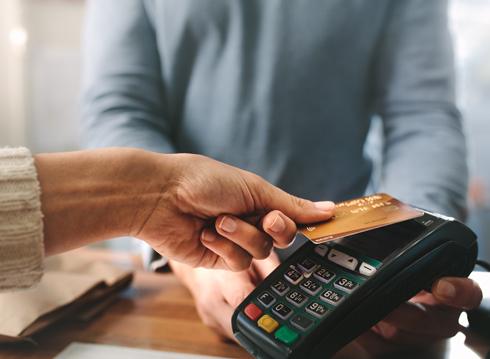
Allows businesses to accept all types of in-person, contactless payments right on an iPhone or Android—from physical debit and credit cards to Apple Pay and other digital wallets—no extra hardware needed. It’s easy, secure and private. Reach new customers with a simpler checkout experience, take payments on the go and explore new setups, like line busting.
How do payment methods work?
Automated recurring billing (ARB): The system securely saves the customer’s payment info by replacing it with a digital code (called a token) instead of the real card number. Then, it automatically pays their bill on schedule every month—like for a streaming service or video game pass—so a customer doesn’t have to lift a finger.
eCheck processing: When a customer sends a digital check straight from their bank account to your business’s bank account, it moves along the ACH network instead of using credit card lines. This is a huge win for small businesses because it is highly secure and typically costs less in processing fees than credit cards.
FAQs
Online payment methods for small business budgets often start with bank transfers and direct debits. Some merchants may prefer these methods specifically because they have lower processing costs compared with credit cards . Real-time payments (RTP) are also becoming popular for similar reasons: they are fast and can be cost-effective. While credit cards are popular, the fees can add up, so offering bank-based payment options can help SMBs save money on every transaction.
Real-time payments (RTP) are cleared and settled within seconds, meaning the money arrives almost instantly, any time of day. Globally, about 37% of merchants4 already use RTP, and it is growing fast because customers don't have to type in their card numbers every time, making checkout a breeze.
An easy way for SMBs to get paid is by using third-party marketplaces—because these sites handle the complicated payment stuff for them. It lets SMBs reach lots of loyal customers without building a complicated website from scratch. For their own sites, SMBs use payment gateways that bundle different payment methods (like cards and digital wallets) into one simple connection.
Digital wallets are effective for helping shoppers buy your goods or services easily. They are quick and easy to minimize frustrations from shoppers who don’t want to have to enter all their payment information. Real-time payments (RTP) are also great for conversion because many customers will be more familiar these days with the ease of payments that go through instantly. Generally, simply offering a choice of preferred payment methods—like adding a local option or buy now, pay later—helps stop people from abandoning their carts.
Merchants can look at two main things: cost and speed. Real-time payments (RTP) win on speed because they settle in seconds. For costs, bank transfers and direct debits are often preferred because they have lower processing fees than credit cards. In fact, 90% of merchants5 actually encourage customers to use their preferred payment method, including ones that may reduce processing costs, by offering special deals or incentives at the checkout.
For payments that happen automatically every month, like subscriptions, tokenized card payments are the recommended choice. Tokenization replaces the card details with a secure code that can be updated automatically if the physical card is lost or expires. This feature, often called lifecycle management, ensures the subscription doesn't get cancelled accidentally. It keeps the cash flowing for the business and the service running for the customer without anyone having to lift a finger.
SMBs can pick payment methods that help them reach new customers and improve the shopping experience. For example, adding digital wallets or mobile payments attracts younger shoppers who live on their phones. SMBs should also look for methods that help prevent people from abandoning their carts at checkout. By adding options that people trust and like to use, small businesses can sell to more people in new markets.
Payment methods that use tokenization are safe because they protect the real card data from fraud. EMV 3-D Secure provides excellent fraud protection for card payments by asking for extra proof (like a code on your phone) if a transaction looks risky. Also, real-time payments are being fortified with AI tools to spot scams quickly, making them safer every day. These technologies work together to approve good orders and block the bad ones.
Credit and debit cards work everywhere, both online and in-store at a point of sale (POS). Digital wallets and mobile payments (like tapping a mobile phone) are also great because they connect smoothly across both online and offline worlds. The “unified commerce” trend means businesses are connecting their online systems with their physical stores so customers can shop however they want.
Start accepting payments today
- The Merchant Risk Council (MRC), Verifi, Visa Acceptance Solutions, and B2B International. (2025). 2025 Global eCommerce Payments & Fraud report https://www.visaacceptance.com/content/dam/documents/campaign/fraud-report/global-fraud-report-2025.pdf
Disclaimer: Case studies, comparisons, statistics, research, and recommendations are provided “AS IS” and intended for informational purposes only and should not be relied upon for operational, marketing, legal, technical, tax, financial or other advice. Visa neither makes any warranty or representation as to the completeness or accuracy of the information within this document, nor assumes any liability or responsibility that may result from reliance on such information. The information contained herein is not intended as investment or legal advice, and readers are encouraged to seek the advice of a competent professional where such advice is required.